
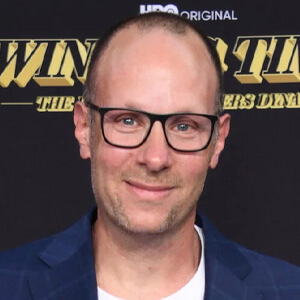
 Jeff Pearlman is a New York Times best-selling author and renowned sports journalist, known for his deeply researched and compelling narratives about the world of sports. He has written several bestselling books, including The Bad Guys Won, a behind-the-scenes look at the rowdy 1986 New York Mets, and Boys Will Be Boys, which chronicles the wild and unforgettable era of the 1990s Dallas Cowboys.
Jeff’s work goes beyond surface-level reporting, diving into the untold stories and complex personalities that shape the sports world. His journey into sports writing began in high school, where a controversial article he wrote unexpectedly gained attention — an early sign of his gift for bold, honest storytelling that continues to define his career today.
Here’s a glimpse of what you’ll learn:
- [02:28] The high school article that sparked Jeff Pearlman’s journalism journey
- [04:33] How Jeff transitioned from writing sports articles to crafting bestselling books
- [05:42] The research and interview process behind Jeff’s book writing
- [08:08] The importance of in-depth interviews and research in uncovering unique sports stories
- [10:06] How Jeff handles conflicting stories from different sources during research
- [15:12] Jeff’s advice for aspiring journalists
- [16:36] The role of social media in empowering and challenging the next generation of sports writers
In this episode…
In today’s world of sports writing, storytelling has become more complex. Journalists and authors must dig deeper into their subjects to uncover fresh narratives, especially when many stories are already well-known or publicly available. How can storytellers uncover new layers to explore when athletes and events have already been extensively covered?
Jeff Pearlman, a best-selling sports author known for his in-depth storytelling, explains how successful storytelling requires digging beyond the surface and finding unique angles that haven’t been told. He emphasizes the importance of interviewing not just the athletes, but also their family members, teammates, and other individuals who have unique insights into the athlete’s life. By finding these hidden stories, journalists can create more meaningful and authentic narratives that stand out from the crowd.
In this episode of Beyond the Game with Hal, Hal Steinberg interviews Jeff Pearlman, New York Times best-selling author and renowned sports journalist, about the art of storytelling in sports. Jeff talks about how to uncover untold stories, the importance of interviews in crafting a narrative, and the challenges of writing about well-known figures. He also touches on the value of researching lesser-known aspects of an athlete’s life to create compelling, multidimensional stories.
Resources mentioned in this episode:
- Jeff Pearlman Website | Facebook | Instagram
- The Bad Guys Won: A Season of Brawling, Boozing, Bimbo Chasing, and Championship Baseball with Straw, Doc, Mookie, Nails, the Kid, and the Rest of the 1986 Mets, the Rowdiest Team Ever to Put on a New York Uniform–and Maybe the Best by Jeff Pearlman
- Sweetness: The Enigmatic Life of Walter Payton by Jeff Pearlman
- The Last Folk Hero: The Life and Myth of Bo Jackson by Jeff Pearlman
- Love Me, Hate Me: Barry Bonds and the Making of an Antihero by Jeff Pearlman
Quotable Moments:
- “You can be visible through words, you can say things and you can write things and people pay attention if you do it well.”
- “A lot of what I do, writing wise is trying to recapture the exact things you’re feeling now.”
- “I don’t just want to write a book about Walter Payton and tell the same 12 Walter Payton stories.”
- “Sitting there at 14, a lot of people in your shoes would never have the gumption to do what you’re doing.”
- “If the person being profiled has control over what is being said, it’s not really a documentary.”
Action Steps:
- Prioritize active listening: Listening more than talking helps in gathering diverse perspectives and insights, especially when interviewing or researching.
- Embrace social media: Using social platforms to build a personal brand allows direct engagement with audiences, bypassing traditional media gatekeepers.
- Conduct thorough research: Deeply investigating topics before writing ensures a well-rounded narrative, addressing the challenge of revealing untold stories and offering fresh perspectives.
- Question and verify sources: Fact-checking and comparing multiple accounts helps prevent misinformation and ensures credibility and accuracy in storytelling.
- Pursue diverse experiences: Engaging with diverse environments and cultures enriches storytelling by providing new insights and authentic experiences.
Sponsor for this episode…
This episode is brought to you by Wilshire Consulting Partners LLC, your trusted advisor for outsourced accounting services.
Our experienced team manages your daily accounting tasks, allowing you to focus on growing your business.
We work collaboratively with you through our secure online platform, providing real-time access to your financial data for a seamless, efficient workflow.
With transparent fixed monthly fees, you can budget confidently — no surprises, just reliable support.
To learn more, visit https://www.wilshirecp.com/.
Episode Transcript:
Intro 00:01
Welcome back to Beyond the Game, where we explore the stories that shape athletes and the sports they love. Going deeper than just the final score. I’m your host, Hal, a 14-year-old aspiring sports broadcaster. And today, we’re diving deep into the world of sports writing and storytelling with none other than New York Times best-selling author Jeff Pearlman. Jeff is a renowned sports author, known for his incredibly researched books that bring life into the untold world of sports stories from his many books, such as ones about the 1986 Mets, the 90s Dallas Cowboys, and his deep dive into individual athletes.
Jeff’s work has a compelling number of blades and his narratives of history and sports journalism. Join us as we discuss Jeff’s journey through the world of sports writing, the challenges he faces, and the stories that have captivated readers around the globe. Get ready and get ready for an enlightened conversation that takes us beyond the game and into the hearts of sports. Sports storytelling with Jeff Pearlman.
Hal Steinberg 01:06
Hey, Jeff.
Jeff Pearlman 01:07
Is that the legendary Hal Steinberg?
Hal Steinberg 01:09
Yeah. What’s good?
Jeff Pearlman 01:11
Where do you live?
Hal Steinberg 01:13
Chicago.
Jeff Pearlman 01:15
Who are your teams?
Hal Steinberg: 01:16
Cubs. Cubs. Bears. Bulls. Hawks.
Jeff Pearlman 01:18
Were you in favor of Justin Field keeping Justin Fields or going with Caleb?
Hal Steinberg: 01:23
Oh, I believe in Caleb. I do like the, like the first two weeks after the season ended, I was like, yeah. But then I was persuaded to go. Caleb.
Jeff Pearlman 01:32
I was kind of the same as you. I was like, I don’t know, they could really build up around fields and blah, blah, blah, and blah blah, blah. But they really built up around Caleb, and I think Caleb is a better field, so.
Hal Steinberg: 01:41
Oh, for sure.
Jeff Pearlman 01:42
Yeah.
Hal Steinberg: 01:43
I’m right.
Jeff Pearlman 01:44
Anyway, what can I do for you, Hal?
Hal Steinberg: 01:46
One more thing on that. The big thing that persuaded me with Caleb is there’s no real elite quarterbacks in the NFC.
Jeff Pearlman 01:54
Let’s see. I mean Jordan, love you can make an argument, is on the verge maybe.
Hal Steinberg 01:58
I need Purdeys. Maybe up there.
Jeff Pearlman 02:00
No, I don’t think Purdey is pretty good, but not.
Hal Steinberg 02:04
All like CJ Stroud, Joe Burrow, Patrick Mahomes, Josh Allen, they’re all in the AFC.
Jeff Pearlman 02:08
Justin Herbert, AFC. Yeah, no, that’s true. Yeah, there’s going to be good. I mean, I don’t know if it might be good. It might suck.
Hal Steinberg 02:17
I mean, the one thing the front office has built up. So Caleb likes it’s impossible for him to fail.
Jeff Pearlman 02:22
True. But then he might fail. So then.
Hal Steinberg 02:25
You never.
Jeff Pearlman 02:26
Know. What grade are you in?
Hal Steinberg 02:28
Eighth ending.
Jeff Pearlman 02:29
Okay, nice. It is impressive that you do this. Very good.
Hal Steinberg 02:34
Thank you. What inspired you to start writing?
Jeff Pearlman 02:38
Well, all right, I was in high school, Mahopac High School, and middle of nowhere, New York. And I wrote for my high school newspaper. And the real big moment for me, truly, was when I wrote a story. I think it was my junior year of high school for the high school newspaper, and it was called Cheerleading: Sport or Activity? And I wrote this piece saying that basically, cheerleading is not a sport, it’s an activity.
And the story comes out, and all the cheerleaders are really mad at me. And I’m sitting in the lunchroom, I remember this. And all the cheerleaders are surrounding me, and they’re yelling at me. But cheerleaders never paid any attention to me whatsoever. I was some nerdy writer slash cross-country runner, and all of a sudden, the male high school cheerleaders, you know, the hottest girls in school, are paying attention to me.
And that was my first moment when I realized, like, you can have a voice with a pen. Now, I don’t write solely for that reason, but that really did something for me. Like this idea. You can be visible through words, you can say things, and you can write things and people. People pay attention if you do it well. So I would say that was the big boost for me, just having a voice for the first time.
Hal Steinberg 03:49
I mean, one thing about the article, were you going off of like sideline cheering or like competitive cheerleading?
Jeff Pearlman 03:57
No. Not competitive. That’s a good question. It was, you know, two pom poms and a hi.
Hal Steinberg 04:02
Oh, I totally agree with you then.
Jeff Pearlman 04:04
Yeah, I wasn’t wrong, I mean I was right. It is not a sport.
Hal Steinberg 04:07
But I think I am competitive. You’re doing all these high-in-the-air flips, all this stuff that’s for sure sport.
Jeff Pearlman 04:14
I agree 100%, but that was not a sport. So that was my first. Holy crap. People are noticing me, and they’re really mad, but they’re noticing me. And that’s kind of cool.
Hal Steinberg 04:23
And then you started off working, writing articles about players. What motivated you or changed you to go full on books?
Jeff Pearlman 04:33
Well. There’s writing for Sports Illustrated, and this is back when it was a really cool job, and my job was that I was a baseball writer. So every week, I would go to like 3 or 4, sometimes two, different major league venues. So they might be like the magazine might be like, alright, on Monday we want you to go to LA and write about the Dodgers, then fly to Kansas City, get the Royals playing the Tigers. And then why don’t you go to New York and catch the Mets playing the Braves?
And it was really cool. It was really fun. But I started to get beat down on it, like after a while that it might seem weird at your age because you’re just entering this whole thing. But like, sometimes you’ll be sitting at a baseball game and you’ll just reach a point where you’re like, I don’t really care anymore. Like, I don’t care.
I don’t care. There’s so much going on in the world. I don’t care about whether the Brewers or Cubs win this game. And I kind of hit that point. And I still love sports, but I didn’t really love the minutia and the nitty gritty. So I thought, I’m going to try writing books. And I wrote a book. My first book was about the 1986 New York Mets, and I really enjoyed it. I loved digging into it. I loved taking a topic and really exploring it, and that kind of set me on my way.
Hal Steinberg 05:42
And did you say you were writing baseball? Did you base that from like, your experience of playing, or like writing?
Jeff Pearlman 05:52
What do you mean? Do you mean? Sorry. That’s my dog. Do you mean?
Hal Steinberg 05:55
Were you inspired? By writing that inspired me.
Jeff Pearlman 05:58
Book?
Hal Steinberg 05:59
Yeah.
Jeff Pearlman 06:00
No, I was inspired because, actually, I was exactly your age. I was 14, you’re 14. Right?
Hal Steinberg 06:05
Yep.
Jeff Pearlman 06:06
- I was 14. And the New York Mets won the World Series. And this was the Mets. They were awesome and dynamic and fun and thrilling. So years later, someone said to me, Well, have you thought about writing a book? And they brought up the idea of the ’86 Mets. And I was so nostalgic for that team. Like, I love that team. I love that era. I love those players. So I would say the number one reason I did it, I’m telling you like, this is the truth. This is a weird thing to tell you, being 14, but I really mean it.
A lot of what I do, writing-wise, is trying to recapture the exact things you’re feeling now. And what I mean is, you see the Cubs win, or there’s some guy in the Cubs you love, maybe a big, like, Dansby Swanson fan. And like, that guy plays really well, and it really juices you up and it really gets you excited. A lot of what I do writing for me is trying to recapture the feelings I had when I was 14, and it felt really innocent. Sorry about that. And sports were really innocent and fun for me. So that book was all about my boyhood and being innocent.
Hal Steinberg 07:13
And actually, about like a baseball team inspiring you. My number’s been 16 since the Cubs won the World Series.
[continue to page 2]
